The lights go out, a room loses power, and the electrical panel has one breaker sitting out of line with the others. If you are asking, “why does my breaker trip,” your electrical system is doing a job it was designed to do: cutting power when it detects a condition that could overheat wiring, damage equipment, or create a fire risk.
A tripped breaker is not usually a reason to panic, but it is a reason to pay attention. Resetting it may restore power temporarily, yet a breaker that trips again is giving you useful information. The key is knowing what you can safely check and when the issue needs a licensed electrician.
Why Does My Breaker Trip in the First Place?
Circuit breakers protect individual electrical circuits. Each circuit is rated to carry only a certain amount of electricity. When current exceeds that rating, when wiring has a fault, or when a connected appliance has a problem, the breaker opens the circuit and stops the flow of power.
Most breaker trips fall into one of three categories: an overloaded circuit, a short circuit, or a ground fault. Older panels, deteriorated wiring, loose connections, water exposure, and incorrectly sized breakers can also contribute. The cause matters because the safe solution for a crowded countertop is very different from the safe solution for damaged wiring inside a wall.
An overloaded circuit
Overloads are common in homes and businesses, especially where several high-demand appliances share one circuit. Space heaters, hair dryers, microwaves, toaster ovens, coffee makers, portable air conditioners, shop tools, and older refrigerators can draw significant power. Turning on one more item may push the circuit beyond its limit.
For example, a kitchen circuit might run normally until a microwave and toaster oven operate at the same time. A bedroom circuit may trip when a space heater is plugged into the same outlets as a television, computer, and charging station. In a commercial setting, added equipment, printers, break-room appliances, or seasonal displays can create the same issue.
An overload often happens while multiple items are running. The breaker may reset and stay on after you unplug or turn off some equipment. That does not automatically mean the circuit has enough capacity for the long term. If overloads are recurring, the better repair may be a dedicated circuit or an electrical upgrade, not a daily routine of unplugging items.
A short circuit
A short circuit occurs when a hot wire contacts a neutral wire or another unintended conductive path. This can cause a sudden surge of current, and the breaker trips quickly to prevent overheating.
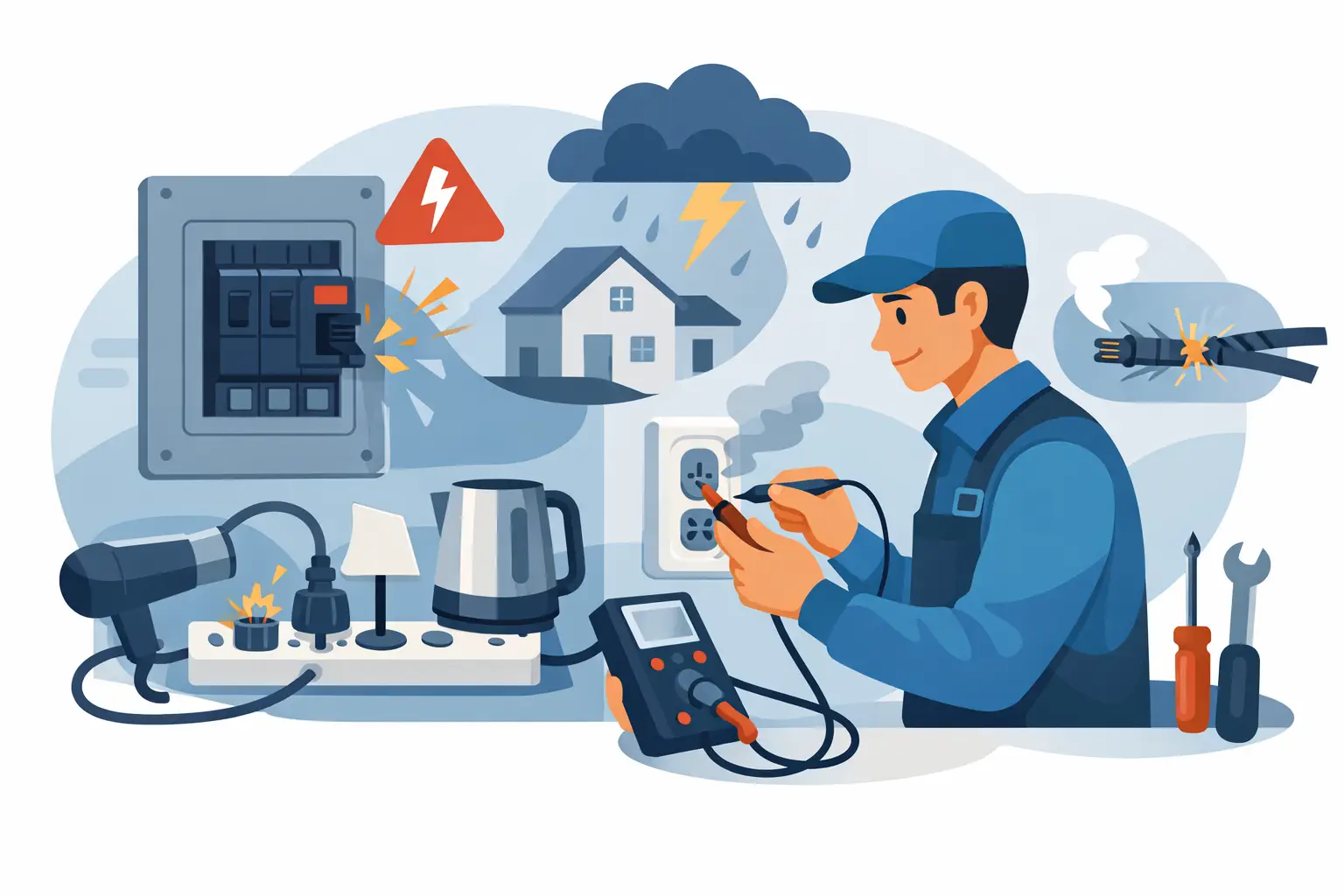
Shorts may come from damaged appliance cords, crushed extension cords, loose wires at an outlet, aging insulation, rodent damage, or a problem inside a fixture or appliance. You may notice a sharp popping sound, a burning smell, discoloration around an outlet, or a breaker that trips immediately after being reset. These are not signs to keep testing the circuit.
If a breaker trips instantly, leave it off. Unplug devices on that circuit only if you can do so safely and there is no heat, smoke, or visible damage. Then arrange for professional troubleshooting. Finding a short requires a careful inspection of the circuit, connections, devices, and equipment involved.
A ground fault
A ground fault happens when electricity takes an unintended path to ground. This is particularly concerning in areas where water is present, such as bathrooms, kitchens, laundry rooms, garages, basements, and outdoor spaces.
Ground-fault circuit interrupter outlets, often called GFCI outlets, are designed to shut off power very quickly when they detect an imbalance that could indicate current is traveling somewhere it should not. A GFCI outlet may need to be reset after a trip, but repeated trips should not be ignored. Moisture in an outdoor receptacle, a failing appliance, or a wiring problem can all be responsible.
What to Do When a Breaker Trips
Start by turning off or unplugging the devices on the affected circuit. Go to the electrical panel and look for a breaker that is in the middle position or fully switched to OFF. To reset it, move the breaker firmly all the way to OFF first, then switch it to ON.
Reset a breaker once after reducing the load or unplugging suspected equipment. If it trips again immediately or shortly afterward, stop resetting it. Repeatedly forcing a breaker back on can allow a dangerous condition to continue and can make troubleshooting harder.
If the power loss is limited to a bathroom, kitchen, garage, laundry area, basement, or exterior outlet, check nearby GFCI outlets. Press the RESET button only after ensuring the area is dry and no appliance or cord shows damage. A tripped GFCI can sometimes affect several outlets farther down the circuit.
Keep the panel area clear and dry. Do not remove the panel cover, touch exposed wiring, install a larger breaker, or replace a breaker with a different size in an attempt to stop tripping. Breaker sizing is tied to wire size and circuit design. Installing an oversized breaker can let wiring overheat before the breaker responds.
Signs You Need an Electrician Right Away
Some breaker issues require prompt professional attention rather than a wait-and-see approach. Contact a qualified electrician if you notice any of the following:
- A breaker trips immediately every time you reset it.
- You smell burning, see smoke, hear buzzing or crackling, or notice a hot electrical panel, outlet, or switch.
- Outlets are scorched, discolored, loose, or warm to the touch.
- Lights flicker throughout the property, power cuts in and out, or multiple circuits are affected.
- A breaker trip follows water intrusion, storm damage, rodent activity, or electrical work.
- Your panel is outdated, crowded, damaged, or unable to support renovations, EV charging, or new equipment.
For smoke, sparking, active fire, or a severe electrical emergency, keep clear of the area, call emergency services when appropriate, and do not attempt a repair yourself. Electrical problems can move beyond a single outlet or appliance quickly.
When the Appliance Is the Problem
Sometimes the circuit is healthy and the appliance is not. If the breaker only trips when one specific item is plugged in or turned on, stop using that item until it can be inspected or repaired. Common culprits include portable heaters, aging refrigerators, disposal units, window air conditioners, power tools, and appliances with worn cords.
Do not assume a power strip solves the problem. A power strip only adds more places to plug in; it does not increase the circuit’s capacity. Extension cords should also be temporary, properly rated for the load, and never run under rugs, through walls, or where they can be pinched or damaged.
Recurring Trips Can Point to a Capacity Problem
A home or commercial space can outgrow its original electrical design. This is especially common after a remodel, addition, basement finish, office reconfiguration, or the purchase of higher-demand equipment. Older properties may have fewer circuits than modern use requires, while some panels may be nearing the end of their service life.
A panel upgrade is not the answer to every tripping breaker. If one circuit is overloaded, adding a dedicated circuit may be the most practical solution. If the service, panel, or overall capacity is insufficient for an EV charger, generator, addition, or growing business needs, a broader upgrade may make more sense. A licensed electrician can assess the load, inspect the wiring, and explain the options clearly before work begins.
Protect Your Property Without Guesswork
A breaker that trips once after a clear overload may be a simple reminder to spread out appliance use. A breaker that keeps tripping is a safety device asking for attention. The most dependable next step is to stop resetting it, make note of what was running when it happened, and have the circuit checked by a professional who can identify the real cause.
Bright Ideas Electrical Solutions helps homeowners and property owners troubleshoot electrical concerns with careful workmanship, clear communication, and a safety-first approach. When power is unreliable, getting the right diagnosis protects more than convenience – it helps protect the people and property that depend on your electrical system.