A power outage changes the priorities at home fast. The refrigerator, sump pump, medical equipment, heating or cooling system, internet connection, and security equipment can all become urgent concerns. A properly planned whole house generator installation gives your home a dependable backup power source without relying on extension cords, portable fuel cans, or last-minute decisions in bad weather.
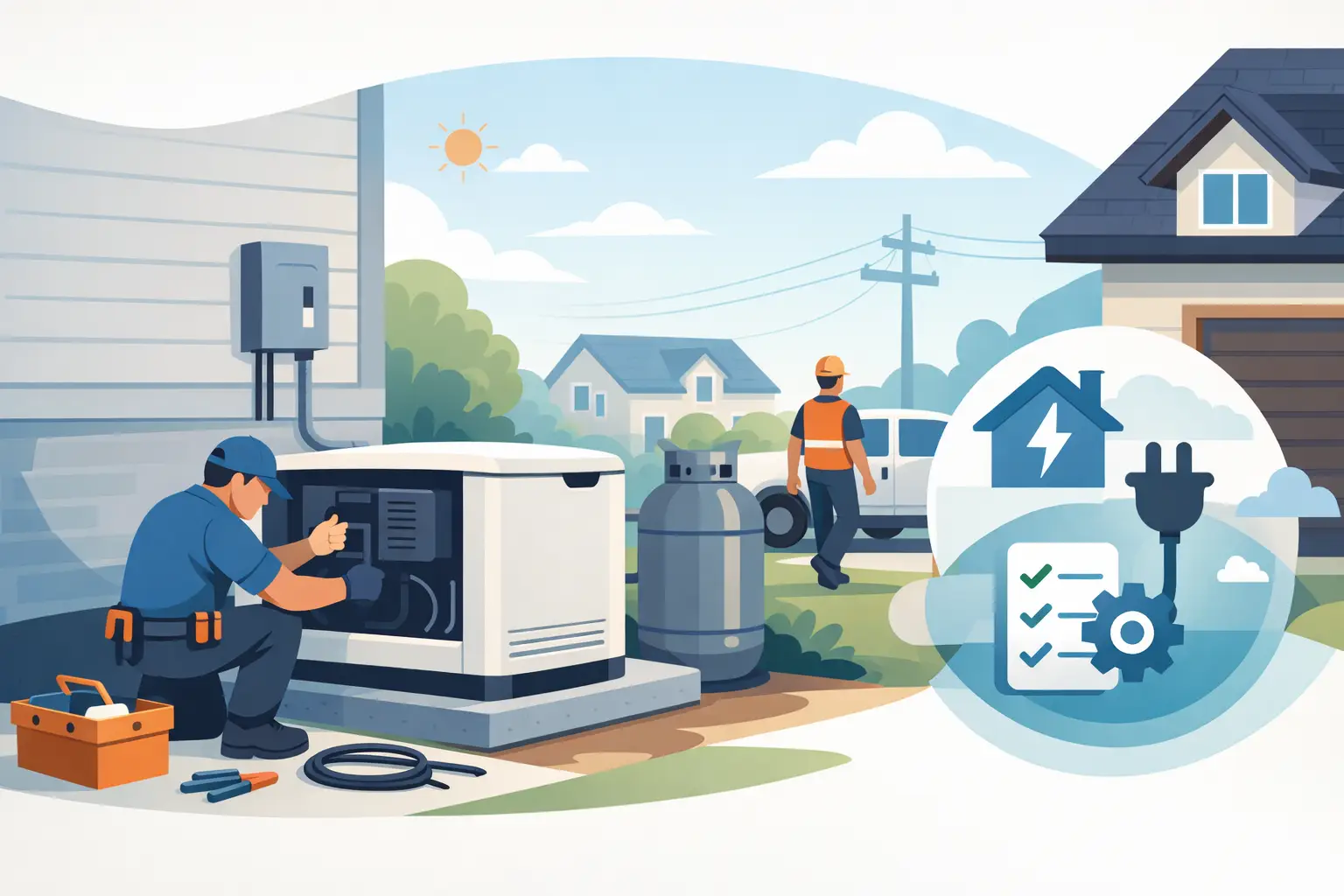
Unlike a portable generator, a standby generator is permanently installed outside the home and connected to a transfer switch. When utility power fails, the system detects the outage, starts the generator, and transfers selected electrical loads to backup power. When utility service returns, it switches the home back and shuts down the generator safely.
What a Whole House Generator Installation Includes
The generator itself is only one part of the project. Safe operation depends on the equipment around it, the capacity of your electrical system, and careful planning for the appliances and circuits you need during an outage.
A typical installation includes a standby generator, a transfer switch or service-rated transfer equipment, electrical wiring, an approved fuel connection, a concrete or composite pad, and the necessary permits and inspections. The electrician also evaluates your main electrical panel and service capacity. In some homes, a panel upgrade or other electrical improvement may be needed before backup power can be added correctly.
The transfer switch is especially important. It prevents generator power from feeding back into the utility lines, a dangerous condition that can injure utility workers and damage equipment. A generator should never be connected by plugging it into an outlet or using an improvised connection. Backup power must be installed with code-compliant transfer equipment by a qualified professional.
Start With the Loads You Actually Need
The phrase “whole house” can mean different things. Some homeowners want enough power for nearly every circuit, including central air conditioning, electric appliances, and larger household loads. Others want a generator that protects essential systems while keeping the project and fuel use more manageable.
The right choice depends on how you live in the home, what equipment is electric, and how long outages tend to last in your area. A house with natural gas heat may need far less generator capacity than a home that relies on electric heat, a well pump, electric water heating, and multiple HVAC systems.
During the planning visit, it helps to discuss what must stay on. That may include refrigeration, kitchen outlets, lighting, garage doors, a sump pump, a well pump, internet equipment, a security system, and medical devices. You may also want heating, air conditioning, laundry equipment, or a home office to remain available.
An electrician considers both running wattage and the higher demand some motors require when starting. Air conditioners, pumps, refrigerators, and similar equipment can draw more power for a brief period at startup. Sizing only by a rough square-footage estimate can leave a generator undersized or lead to paying for more capacity than the home needs.
Whole-Home Coverage vs. Essential-Load Coverage
A larger standby generator can provide broad coverage and a more normal day-to-day experience during an outage. It may be the right fit for a larger home, a household with medical needs, or a property where extended outages create real risk. It also usually comes with a higher equipment cost, greater fuel demand, and potentially more electrical work.
Essential-load coverage focuses backup power on selected circuits. This approach can be practical when the goal is protecting critical equipment rather than running every appliance at once. There is no one-size-fits-all answer. The best system is the one that matches your priorities, budget, electrical capacity, and fuel supply.
Site, Fuel, and Permit Planning Matter
A standby generator needs a suitable outdoor location. It must sit on a stable pad with proper clearance from the home, doors, windows, vents, utility equipment, and combustible materials. Local codes and manufacturer requirements guide the final placement. The location should also allow technicians safe access for maintenance and keep exhaust away from occupied areas.
Fuel is another major decision. Many residential standby generators operate on natural gas or propane. Natural gas can be convenient where service is available because it does not require refilling a tank during an outage. However, the gas line must be properly sized to support the generator along with other gas appliances in the home.
Propane can be an excellent option in areas without natural gas service, but the tank size and fuel planning become more important. Long outages can use a significant amount of fuel, particularly with larger generators. An experienced installer can coordinate the electrical scope with the fuel provider and help avoid a system that is electrically correct but limited by inadequate fuel delivery.
Permits and inspections are not paperwork to skip. They help verify that the installation meets local requirements for electrical safety, placement, grounding, fuel connections, and emergency operation. Requirements vary by municipality, so a professional installer should account for the rules that apply to your property before work begins.
The Electrical Panel May Need Attention First
Many homeowners consider a generator after experiencing an outage, only to learn that their electrical panel is outdated, crowded, damaged, or no longer sized for the home’s electrical needs. That does not automatically stop the project, but it can affect the scope.
A panel inspection can reveal issues such as corrosion, overheating, obsolete equipment, limited breaker space, or previous work that does not meet current standards. If upgrades are needed, addressing them before or during the generator project creates a safer foundation for reliable backup power.
This is also a good time to consider changes planned for the near future. A home addition, new electric range, EV charger, workshop, hot tub, or HVAC upgrade can change electrical demand. Planning ahead may help you avoid revisiting the generator setup after another major upgrade.
What Installation Day Usually Looks Like
A professional whole house generator installation is organized around safety and minimizing disruption to the property. The team prepares the generator location, sets the equipment, installs transfer equipment, routes electrical connections, and coordinates the fuel connection. Depending on the project, this work may take more than one visit or require coordination with inspectors and the utility company.
There may be a planned electrical shutdown while transfer equipment is connected and tested. Your electrician should explain when that interruption is expected, what areas of the home will be affected, and how the work area will be protected. Clear communication is part of quality workmanship, especially when a project affects the home’s main electrical service.
Once the equipment is installed, the system should be tested under operating conditions. The homeowner should also receive clear guidance on automatic operation, exercise schedules, warning indicators, maintenance needs, and what to do if the generator does not start as expected.
Maintenance Protects Your Backup Plan
Standby generators are designed to run automatically, but they are still mechanical and electrical equipment. Regular maintenance helps ensure the unit is ready when an outage happens months after installation.
Most systems run a scheduled exercise cycle, often once a week. This is helpful, but it does not replace professional service. Maintenance may include checking the battery, oil, filters, connections, enclosure, error codes, and transfer operation. The recommended schedule depends on the generator model, fuel type, operating hours, and manufacturer instructions.
Keep the area around the generator clear of leaves, snow buildup, stored materials, and landscaping that could restrict airflow or service access. If the unit shows an alert or fails to exercise, arrange service promptly rather than waiting for the next storm.
Questions Homeowners Often Ask
Will a standby generator power everything in my home?
It can, if the system is sized and designed for whole-home coverage. Many installations instead prioritize essential loads to control cost and fuel use. A load calculation is the best way to determine what your system can support.
Can I install a generator myself?
A standby system involves main electrical service work, transfer equipment, grounding, permits, and often fuel connections. This is not a do-it-yourself project. Professional installation protects your household, your property, and the utility workers serving your area.
How long will a generator run?
With natural gas, run time is generally tied to the availability of utility gas service. With propane, run time depends on tank capacity, generator size, and the amount of electrical load being used. Larger loads consume more fuel.
A generator is most valuable when it works quietly in the background and is ready before the next outage puts your household under pressure. Bright Ideas Electrical Solutions can help you plan a system around your home’s real electrical needs, with straightforward communication, code-conscious work, and respect for your budget.