A breaker that trips once after a hair dryer and space heater run together may be doing its job. A panel that trips repeatedly, feels warm, or shows visible damage is telling you something different. Knowing the signs electrical panel needs replacement helps you act before a capacity problem becomes a safety issue, a costly business interruption, or a failed inspection during a sale or renovation.
Your electrical panel is the control center for the property. It distributes power, protects circuits from overloads, and gives a qualified electrician a way to safely shut off power for repairs. Panels do not have a single expiration date, but age, condition, capacity, and previous work all matter. Here are the warning signs worth taking seriously.
1. Breakers trip often or will not reset
Circuit breakers trip when a circuit is overloaded or a fault is detected. An occasional trip can happen, especially in kitchens, bathrooms, garages, and work areas where several high-demand appliances are used at once. The concern starts when the same breaker trips repeatedly under normal use.
If a breaker immediately trips again after you reset it, leave it off and call an electrician. Do not keep forcing it back on. The cause could be a damaged appliance, loose connection, overloaded circuit, wiring fault, or a failing breaker. Even if the issue is limited to one circuit, an inspection can determine whether the panel itself is still safe and reliable.
2. Lights dim, flicker, or surge when equipment starts
Lights that briefly dim when an air conditioner, furnace blower, refrigerator, or power tool starts can point to a circuit carrying more load than it should. Flickering in one room may be a fixture or switch issue. Flickering throughout the house or commercial space deserves faster attention.
Pay particular attention to lights that brighten unexpectedly, bulbs that burn out often, or electronics that reset without explanation. These symptoms can be caused by loose or deteriorating connections. Because electrical connections can overheat without being visible from the room, this is not a repair to put off.
3. The panel is warm, smells burnt, or makes unusual noises
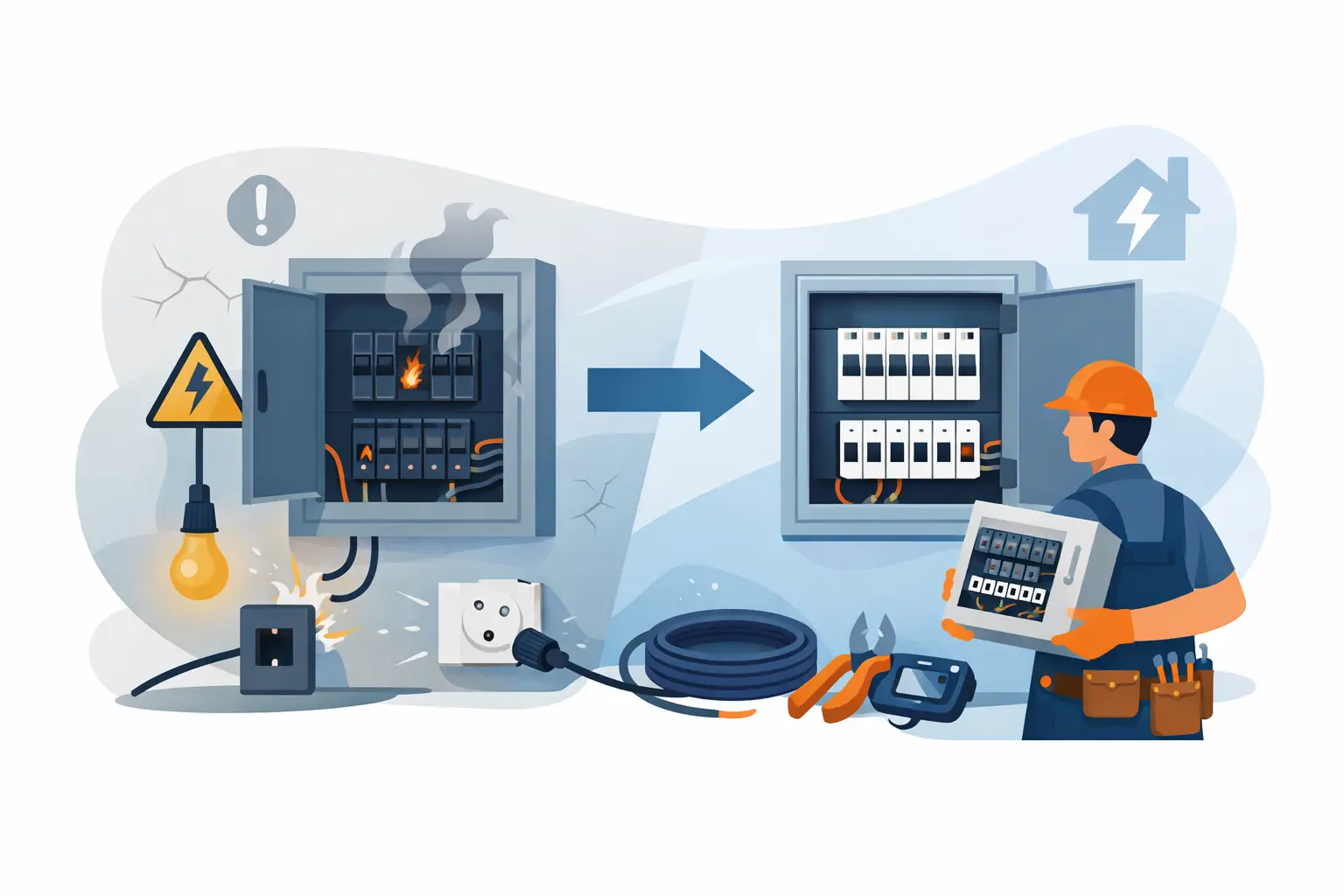
Your electrical panel should not feel hot to the touch. A little warmth from normal operation is different from noticeable heat, a burning odor, discoloration, buzzing, crackling, or popping sounds. Those conditions can indicate a loose connection, damaged breaker, overloaded equipment, or arcing inside the panel.
If you smell burning, see smoke, hear active crackling, or notice sparking, treat it as an emergency. Move people away from the area if it is safe to do so, avoid touching the panel, and contact an emergency electrician. Bright Ideas Electrical Solutions provides 24/7 emergency response for urgent electrical concerns that cannot wait for normal business hours.
4. There is rust, corrosion, water damage, or physical damage
A panel installed in a damp basement, garage, utility room, or outdoor location can be affected by moisture over time. Rust on the enclosure, corrosion around breakers, water stains, or evidence of a leak should be evaluated. Moisture can damage metal components and create unsafe paths for electricity.
Physical damage matters, too. A dented enclosure, broken panel cover, missing knockouts, exposed openings, or loose breakers can compromise the protection the panel is meant to provide. The repair may be straightforward in some cases, but a thorough inspection is needed to decide whether replacement is the safer option.
5. You still have fuses or an obsolete panel
Fuse boxes are not automatically unsafe, but they are older technology with limited capacity and less flexibility for modern electrical needs. Some older panel brands and equipment types may also have known reliability concerns, discontinued parts, or a history that makes insurers and inspectors cautious.
A licensed electrician can identify the panel manufacturer, evaluate its condition, and explain the practical options. Replacement is often recommended when safe parts are difficult to obtain, the equipment shows wear, or the panel cannot support the property as it is used today. This is especially relevant before listing a property, buying an older home, or completing a major renovation.
6. You have run out of breaker space
A panel full of breakers is not always an immediate hazard, but it can become a problem when a property needs another dedicated circuit. Homeowners often discover this when adding a basement finish, workshop, hot tub, electric range, sump pump, or EV charger. Commercial properties may face the same issue when adding equipment, lighting, workstations, or tenant improvements.
Using tandem breakers can sometimes be an approved solution, depending on the panel design and load calculation. It is not a universal fix. If every available space is occupied, or if previous additions look crowded or improvised, a panel upgrade may provide the safer long-term path. It also gives your electrician room to organize circuits clearly and install future additions properly.
7. The panel cannot support your current electrical demand
Modern properties use more electricity than many older panels were designed to handle. Central air conditioning, electric heat, induction cooking, EV charging, home offices, servers, advanced lighting, and backup-power systems can add substantial demand. A panel may appear to work until multiple loads operate at once.
A service upgrade is not based on guesswork or the number printed on a breaker. An electrician performs a load calculation that considers the size of the service, existing appliances, heating and cooling equipment, and planned additions. In some cases, a new subpanel is enough. In others, the main panel and service equipment need to be upgraded together.
8. The panel has been modified improperly
Electrical panels sometimes reveal years of quick fixes: unlabeled breakers, double-tapped connections, mismatched breakers, open spaces without proper covers, oversized breakers, or wiring that is too short, damaged, or poorly routed. These conditions are common in older homes and properties that have changed hands several times.
Improper work does not always mean the entire panel must be replaced. A qualified inspection can separate correctable issues from equipment that is no longer worth repairing. The goal is not to recommend more work than necessary. It is to make sure the panel can protect the wiring and operate safely under real-world use.
9. You are planning a renovation, EV charger, or generator
Planned projects are often the best time to assess panel capacity. Opening walls for a remodel, upgrading a kitchen, adding square footage, installing an EV charger, or connecting a generator can expose limitations that were easy to overlook before.
Waiting until after the project begins can create delays, change the scope of work, and increase cost. Reviewing the panel early gives you time to plan the right equipment, obtain permits where required, and coordinate the electrical work with the rest of the project. It also helps prevent a new appliance or addition from overloading an already stressed system.
10. Your property has unexplained electrical problems
Dead outlets, switches that stop working, frequent GFCI trips, partial power loss, or appliances that behave inconsistently may not always originate at the panel. Still, they are reasons to schedule professional troubleshooting rather than replacing outlets or breakers one at a time.
A skilled electrician checks the full path of the problem, including the panel, breakers, connections, branch wiring, and affected devices. That careful approach protects your budget. Sometimes the panel is not the issue. When it is, finding it early can prevent damage to equipment and reduce the chance of a larger failure.
What to do if you suspect a panel problem
Start by paying attention to the pattern. Note which breakers trip, what was running at the time, whether lights flicker in more than one area, and whether you have noticed heat, odor, or moisture. This information helps an electrician diagnose the issue efficiently.
Do not remove the panel cover, touch internal components, or replace a larger breaker to stop tripping. A breaker is sized to protect the wiring behind it. Increasing its size without evaluating the wire can create an overheating risk. Keep the panel accessible, avoid storing items in front of it, and arrange a professional inspection.
An electrical panel replacement is an investment in safety, capacity, and dependability, not a one-size-fits-all repair. If your panel is showing warning signs or your property is about to demand more power, a clear assessment from a qualified electrician can give you the information you need to make a confident decision before a small warning becomes an urgent problem.